Oluwadamilola Ogunmuko
About
Biography
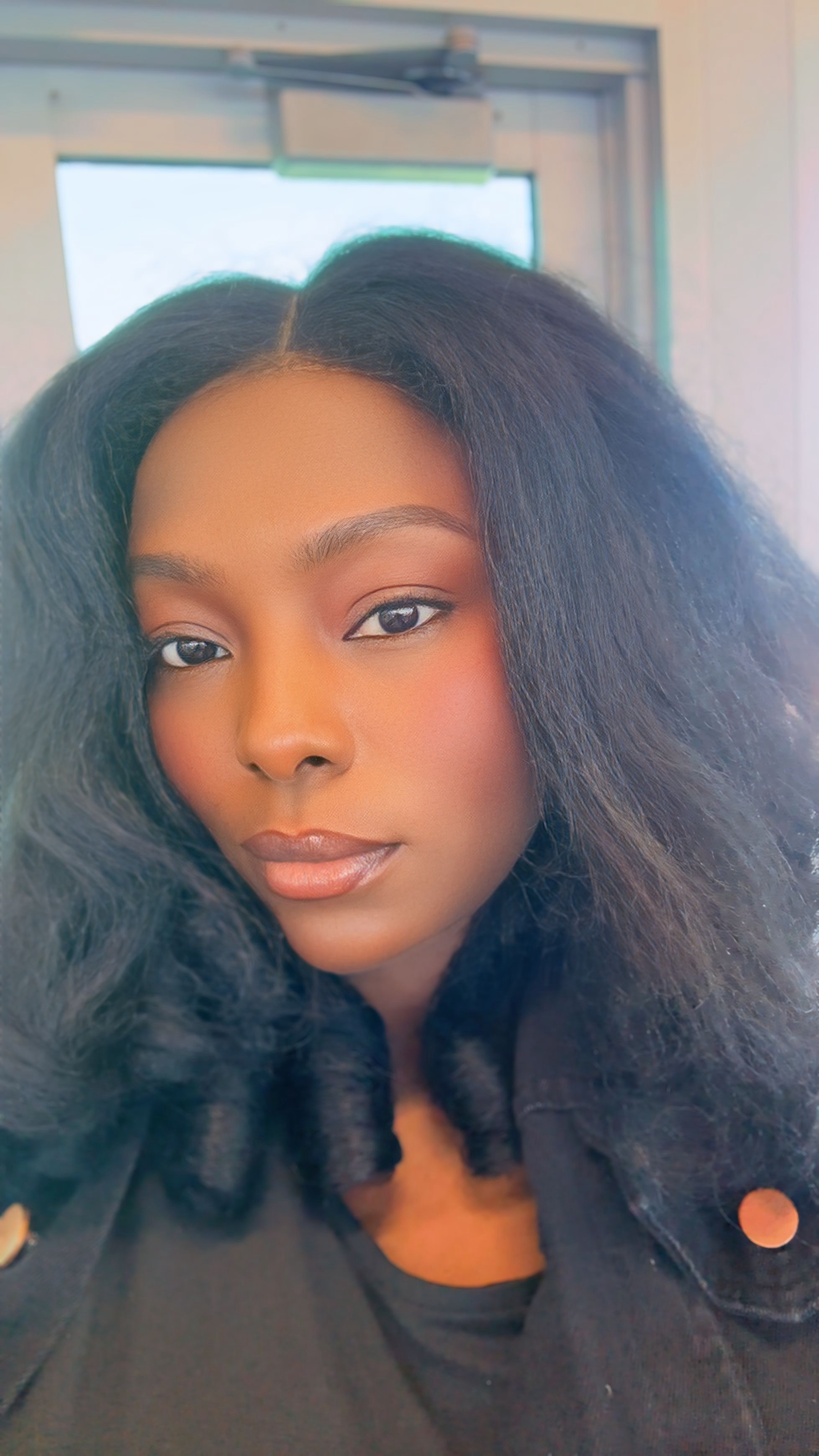
I am a cultural, Africana, global Black, and literary studies scholar working at the intersection of migration, surveillance, and identity. I go by Dami (Dah-mee); my full name is pronounced oh-loo-wah-dah-mee-LOH-lah oh-goon-MOO-koh. I am completing my PhD at the Department of African Cultural Studies at the University of Wisconsin-Madison. I adopt a multidisciplinary research method by combining ethnographic, cultural, and literary sources. My dissertation, “Mobility Privilege: Global Citizens and Border Politics”, focuses on the representation of African mobilities, migration, and surveillance in cultural productions like films, music, and novels.
As an educator positioned at the intersection of African and global Black studies, my teaching philosophy focuses on helping students understand concepts, actively participate in classroom discussion, and take ownership of their learning. I have taught courses on African migration, African storytellers, and African Cultural Expression. I believe students should be invested participants and translate their learning experience into practical skills they can use beyond the classroom. More broadly, I engage with intersectional pedagogy and I strongly believe that education develops the ability to question, think critically, and act with autonomy.
Publications
Selected writing
Peer-reviewed Articles
-
“Spectral Cinema: Return, Disembodiment and Haunting Narratives in Selected Works of Mati Diop”
-
“Seeing Differently: Selective Visibility and Perceptual Surveillance”
Book Reviews
-
“The Roars of the Suppressed: A Review of Abi Daré’s And So I Roar”
-
Review of Writing on the Soil: Land and Landscape in Literature from Eastern and Southern Africa, by Ng’ang’a Wahu-Muchiri
Awards
Awards and grants
-
Tejumola Graduate Student Award
-
UW-Madison Student Research Funds
Teaching
Critical media practice
My critical media practice focuses on developing student's media literacy and visual citizenship. activities and tasks charge students to gain a keen eye for evaluating biases, stereotypes, and systems of power shaping gender, class, racial identities. I treat media-making as a form of critical inquiry. In my classroom, students do not just learn about migration, language, and Black cultural production, I equip them with the skills to critically read and interpret media with the goal of evaluating power and agency.
I assign tasks such as map-making, photo essays, chapbooks, websites, and short films as a mode to getting students to tap into their own creativity. In African 203 "Africans in Motion: Migration, Identity and Representation" students complete a Migration Creative Project that combines an original visual and story. Students were instructed to engage with visual and textual components that explores migration themes in our course materials. and demonstrate their understanding of how different artistic forms can highlight aspects of migration that traditional academic writing might not capture. Engaging real sources on people of African descent, they build their projects in print or on web platforms like Canva, Adobe Spark, and WordPress. Students build ethical practice by using real stories of immigrants, seeking consent, and presenting traumatic histories in respectful ways. Students also practice critical media making, where they interrogate power structures and combat them through mapping. They chart the journeys of characters and narrators in the texts we study in class and resolve what their maps leave out. Drawing on critical cartography and Black geographies, the exercise evaluates a map as a presentation of a character's journey and position. Students decide how to represent movement and borders. They also explain what their chosen forms make visible or conceal. For Instance, when we studied Buchi Emecheta's Second Class Citizen, students were asked to draw a map that shows the journey of the character from Nigeria to Europe. They were encouraged to identify locations and situations that build or tear down the character, show how events shape the character's development, reflect on the psychological condition of the character, and show the story's historical and cultural contexts. They were encouraged to either do the work by hand or use digital tools.
My teaching also draws on multiliteracies pedagogy across visual, spoken, and written forms. In my intermediate Yoruba class (African 373), students were asked to role-play as market traders and buyers. This creative exercise led to interactions in which they picked up new vocabulary specific to markets and food items in Yoruba. Students from that course later produced a film project in a subsequent semester, although I was not their instructor then.
In African 210, The African Storyteller, where I served as a teaching assistant, students complete a Rites of Passage Practice Project that asks them to translate an oral story into a two-to-five-minute video performance. Students select a story from the week's module, retell it in their own words and voice instead of repeating the original story verbatim. They used different digital video and audio tools to tell their selected stories and formatted the video using a social media style - TikTok, Instagram, or YouTube. This project encouraged students to learn how to use digital tools and improve their skills. It also helped them learn how to translate written stories into an oral/video format in a creative way.
Teaching
Classes taught
University of Wisconsin-Madison, Department of African Cultural Studies
-
AFRICAN 210: The African Storyteller
-
AFRICAN 203: Africans in Motion: Migration, Identity and Representation
-
AFRICAN 210: The African Storyteller
-
AFRICAN 210: The African Storyteller
-
AFRICAN 373: Intermediate Yoruba
-
AFRICAN 210: The African Storyteller
-
AFRICAN 100: Introduction to African Cultural Expression
-
AFRICAN 210: The African Storyteller
Federal College of Fisheries and Marine Technology, VI, Lagos, General Studies Department
-
GNS 101: Use of English 1
-
GNS 102: Communication in English 1
Teaching
Syllabi
Sample syllabi are available upon request. Please contact me at damiogunmuko@gmail.com.
Contact
Get in touch
- damiogunmuko@gmail.com